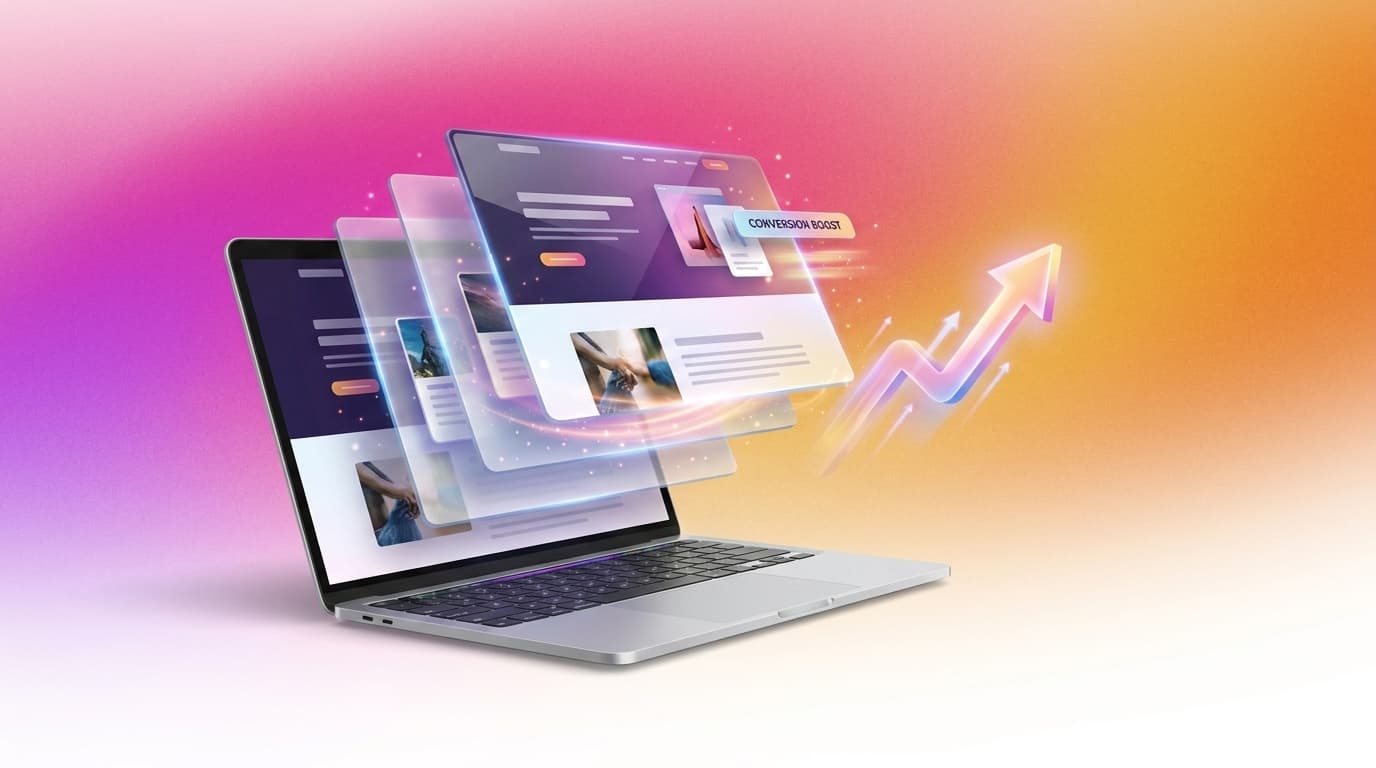
A 3D landing page uses depth, motion, and interactivity to explain a product faster than static text and images can. Done well, it holds attention longer and makes complex offers feel tangible, which is why interactive pages often outperform flat ones on time-on-page and conversion.
The catch: motion that exists only to look impressive usually hurts. The pages that win use 3D to advance the story, not decorate around it.
Why motion helps conversion
Attention is the scarcest resource on a landing page. Movement tied to scroll creates a sense of progression that pulls visitors down the page, and showing a product in 3D lets people understand it without reading a paragraph of explanation.
- Faster comprehension, a rotating product or animated flow explains in seconds
- Longer engagement, scroll-led reveals keep people moving toward the CTA
- Stronger recall, motion and depth make the message more memorable
When 3D backfires
Heavy scenes that block the first paint, autoplay effects that distract from the headline, or animation with no narrative purpose all reduce conversions. If a visitor can't tell what you offer in the first few seconds, the motion has failed regardless of how polished it looks.
How to use 3D the right way
- Lead with a clear headline and CTA above the fold, motion supports it, never hides it
- Tie each animated moment to a specific message or product benefit
- Reduce motion on mobile and respect prefers-reduced-motion for accessibility
- Keep the largest contentful paint fast; lazy-load heavy scenes below the fold
Frequently asked questions
Do 3D landing pages hurt page speed?
They can if scenes load eagerly. Keep the hero light, lazy-load heavy 3D below the fold, and reduce motion on mobile so Core Web Vitals stay healthy.
Are 3D pages good for SEO?
Yes, when the meaningful content is server-rendered and fast. Search engines reward engagement and speed, so keep text crawlable and motion performant.